SampleThis entry is a design fixture: the scores, spec sheet and field notes are placeholders. Replace the entry in the editorial panel with real bench data before publishing.
We have spent a decade putting small-form-factor PCs into operatories and then apologising for them. They throttle inside closed cabinets, their fans whine through a hygiene appointment, and the ones with tool-less chassis are usually the ones that cost as much as a chair.
The Micro Plus is the first unit in this class where we stopped finding reasons to say no.
What we actually installed
Fourteen units across four practices: two general practices with Eaglesoft and Dexis, one with Open Dental and a Carestream sensor, and one paediatric office running a scanner plus two intraoral cameras on the same machine. Every unit went into an operatory cabinet with the factory stand, not an open shelf.
Each machine ran the full imaging suite, the practice management client, a browser with the insurance portals open, and the usual background agents. We deliberately did not add memory beyond the 16 GB configuration to see where it broke.
How it held up
The unit stayed quiet. That sounds like a small thing until you have sat through a filling with a 40 mm fan at full tilt two feet from the patient's ear. The thermal design moves air across the chassis rather than trapping it, and the cabinet we used had a single rear vent. Under a full imaging capture the fan stepped up audibly and settled within a few seconds.
Sensors held their connection. This is the test that eliminates most of the market for us, and it is not really about the PC. Windows' USB selective suspend will happily power down a sensor mid-appointment, and the device reappears only after a reboot the hygienist will not perform. Dell's front ports are the ones that stayed powered through sleep in our configuration, so that is where the sensor went. The rear ports still suspended, which means the power plan fix belongs in the golden image, not in a support ticket six months later.
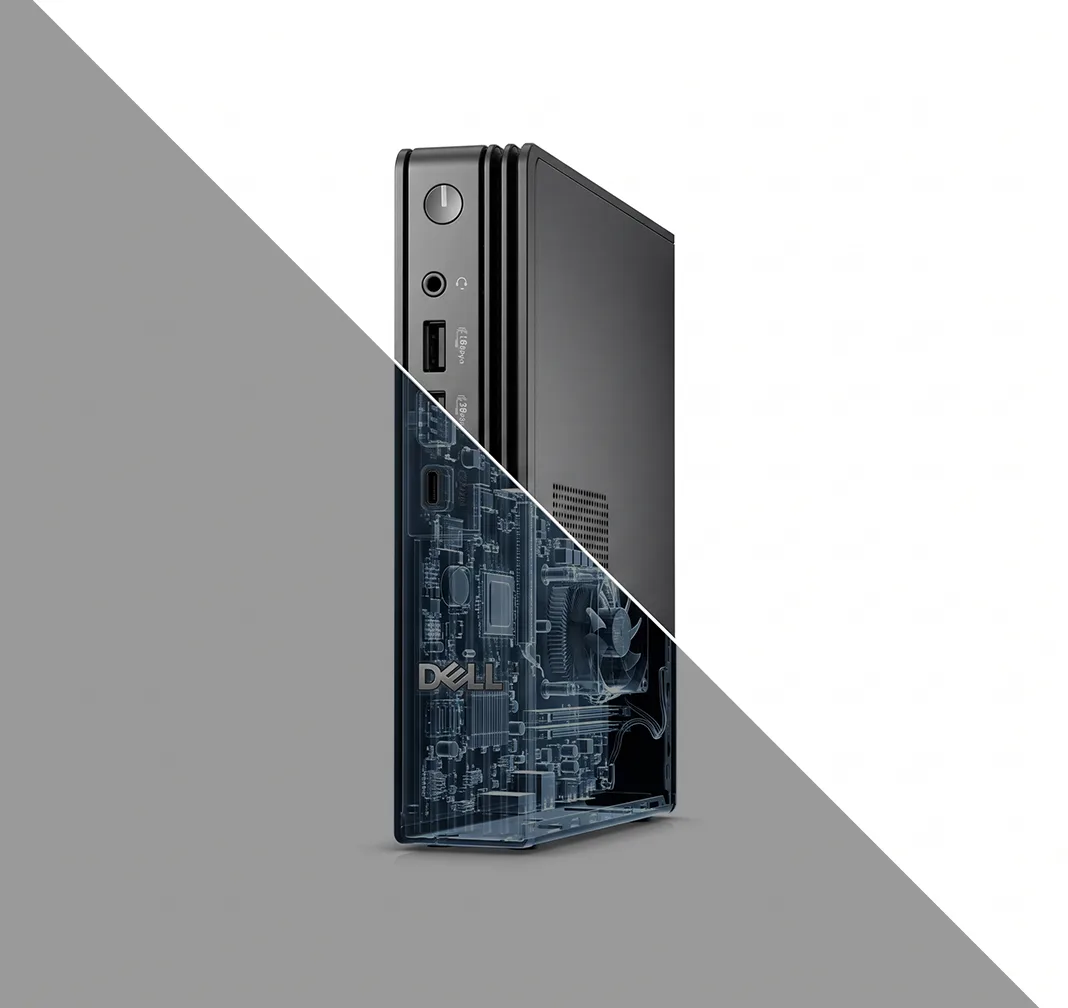
The tool-less chassis is the part we did not expect to care about. We pulled a drive in one unit after a bad controller, and the swap took four minutes with the machine still mounted. A depot repair would have cost a day of chair time and a phone call.
Where it bites
The mount is the tax. A micro PC without a VESA bracket ends up on the cabinet floor, which is where dust and cleaning fluid go. Budget the stand as part of the build, not as an afterthought on the invoice.
The video outputs are also narrower than the price suggests. One HDMI and one DisplayPort is fine for an operatory with a single monitor and a patient screen mirroring through the imaging software, but the front desk wants three screens and a dock. If you are buying one SKU for the whole practice, buy the dock with it.
Who should buy it
Practices standardising new operatories, and DSOs replacing a mixed fleet with one baseline. Buy the vPro SKU — the remote BIOS and power control is worth more than the incremental cost the first time a machine will not boot at 7:50 a.m.
Skip it if you need three native video outputs or if your cabinets have no rear ventilation at all. No micro PC fixes a sealed box.
What holds up
- Runs a full imaging suite and the practice management client at once without the fan becoming the loudest thing in the room
- Tool-less chassis: a failed NVMe drive is a four-minute swap, not a depot shipment
- vPro on the Plus SKU means remote power and BIOS access when the front desk cannot reach the box
- Front USB ports hold power through sleep, so sensors stop disappearing
What costs you
- Rear USB ports still default to selective suspend; the power plan has to be fixed on every image
- The optional stand and VESA mount are priced as accessories, not parts
- Single HDMI plus DisplayPort is fine for one screen, tight for a dual-monitor front desk
| Processor | Intel Core i7-13700T, 16 cores |
|---|---|
| Memory | 16 GB DDR5, two SODIMM slots (user accessible) |
| Storage | 512 GB NVMe, tool-less M.2 bay |
| Video | HDMI 2.1 + DisplayPort 1.4a, three displays with a dock |
| Network | 1 GbE, Wi-Fi 6E, vPro / AMT |
| Dimensions | 36 × 178 × 182 mm, 1.2 kg |
| Warranty | 3 years on-site, next business day |
The verdict
The first micro PC we have been comfortable standardising across an operatory build — if you buy the vPro SKU and plan the mount before the cabinets go in.
How we got this unit. No vendor pays for placement, scoring, or a slot in a roundup. Hardware is bought at street price or loaned under a return agreement that carries no editorial conditions. Loan status is disclosed on every review.
Updates. Reviews are re-checked when the manufacturer ships a significant firmware or hardware revision, and at least once a year while the product is still sold.